
The door is a noun. The name is a verb.

The challenge is simple, and it is a fair one. The verse at the center of the argument is John 14, verse 6: "I am the way, the truth, and the life: no man cometh unto the Father, but by me." The challenger says: if that sentence is not true, then the man who said it is a liar. The defense says: if it is true, then the door is real, and the door leads one way.
And both sides, without noticing, have agreed on the same thing: that they are standing in front of a door. A door is a noun. It is a place. It has a list, and a gate, and a keeper. The entire argument — liar or credible — is an argument about who gets through.
Working HypothesisThis dossier makes a different move. In the original language, the name that appears in that sentence was never a noun to begin with. It was a verb. And when you read the sentence the way the original grammar reads it, the door does not open. The door stops being a door.
"I am the way, the truth, and the life."John 14:6 · King James — the verse both sides are fighting over
Before you read further, say the verse out loud. "I am the way, the truth, and the life." Now say it a second time, slower, and listen. The sentence is not describing a person. It is doing something. This dossier is about that something — what the name does, where the noun came from, and how to walk in the reading instead of arguing about the door.
The first time the name comes out, it is a verb.
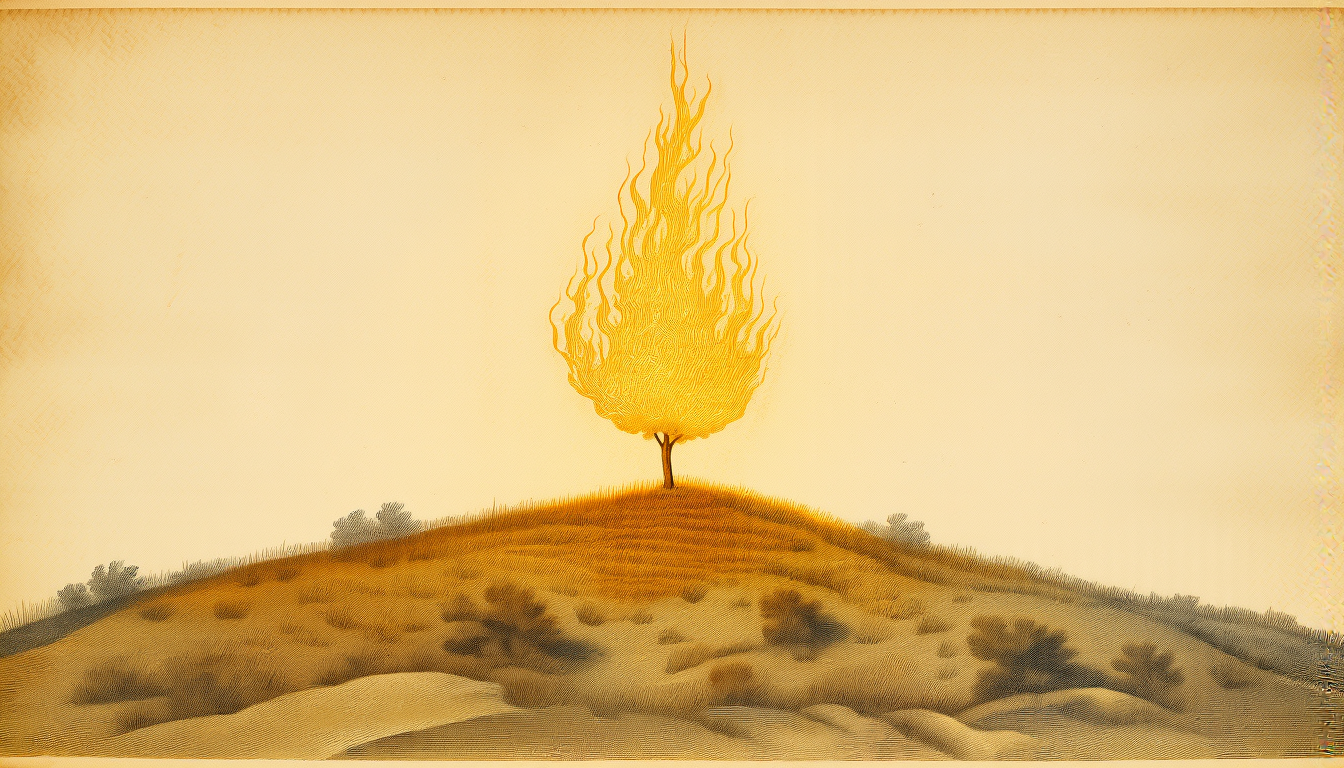
Go back before John. Before the door, before the argument, before the translation. Exodus 3. A man at a mountain called Horeb, a bush burning and not consumed, and an exchange about a name. The scholars have read this scene for centuries, and the details hold. The word for the bush, seneh, is a wordplay on Sinai — the place where the law will land is named in the plant that is burning.
Moses asks what he is to tell the people when they ask for the name. The answer, in the King James rendering of the Hebrew: "And God said unto Moses, I AM THAT I AM: say unto the children of Israel, I AM hath sent me unto you." In the Hebrew, the phrase is built from the verb 'ehyeh — a form of "to be" — and the name YHWH that follows is built on the same root. It is not a label. The documented grammatical reading is a causative: "he causes to be."
"And God said unto Moses, I AM THAT I AM."Exodus 3:14 · King James
The first time the name is spoken in the biblical record, it is doing something. It is not naming a somebody. It is the act of causing to be — the verb itself, spoken.
Five minutes. Take the name you use for God and say it as a verb, not a label: "God causes to be." Then watch your day for one hour and name three things that came into being — a thought, a decision, a moment. You are not praying. You are loading the name back into its grammar.
The noun did not arrive with the language. It arrived with a translation.
Now the exact moment the verb became a noun. It is not a mystery. It is a documented translation event. When the Hebrew scriptures were rendered into Greek — the Septuagint, the third to second century before the common era — the translators worked in a language that had something Hebrew did not: a philosophical concept of Being, as a substance. Greek could ask what something is, and mean a thing. Hebrew could not, in that way.
The Septuagint rendered the Hebrew 'ehyeh as eimi ho on — "I am he who is" — and a Greek thinker named Philo took that rendering and built an ontology on it. The verb had become a noun with a capital letter.
"Hebrew simply did not have a concept of Being, in the manner of Greek philosophy."SBL, Introduction to the Hebrew Bible — on the meaning of the nameWorking Hypothesis
And once the noun was in, an architecture followed it. A noun is a thing, and a thing needs a place, a body, and a calendar. God as a place — heaven, up there, a destination. God as a body — a figure, with a face, with a hand, with a throne. God as a calendar — a schedule, of judgment and of deadline. A place you can go to. A body you can picture. A calendar you can fear. The architecture is not in the original grammar. It is the furniture the noun brought in with it.
That is the whole history in one line: the verb met a language that had a noun for it, and the noun won.
When the I is released from the ego, "I am" becomes "God is."

This is the move the translation lost — and the move the channeling put back last night. The rule, in the words it came through: "The I is always released from the ego. When it is not, it is not of God." So when the name speaks in the first person, the first person is empty. The I is not a person. It is a doorway.
And when the I is released, the sentence changes its owner. "I am" is no longer a claim made by a man. It becomes the name operating: God is. The way is the path. The truth is the purity. The life is the purpose. The same sentence, read the way the original grammar reads it, is not a gatekeeper introducing himself. It is the verb doing what the verb does — causing to be — in the place where the I was.
"The I is always released from the ego. When it is not, it is not of God."The channeling · 2026-10-17
One more line from the same night, and it is the key to the whole door: "God is presence, and presence absorbs the concepts of space and time." A place is a concept of space. A calendar is a concept of time. Presence absorbs both. That is what happens to the architecture.
Before you speak, take one breath and let the I go out of the sentence. Say "God is" instead of "I am." Feel the difference in your chest. Then do the check the teaching gives: make sure the information you are feeling is not what you are thinking. Feeling and thought are different instruments. Use the right one.
They are not seven claims about a man. They are seven descriptions of what the name does.
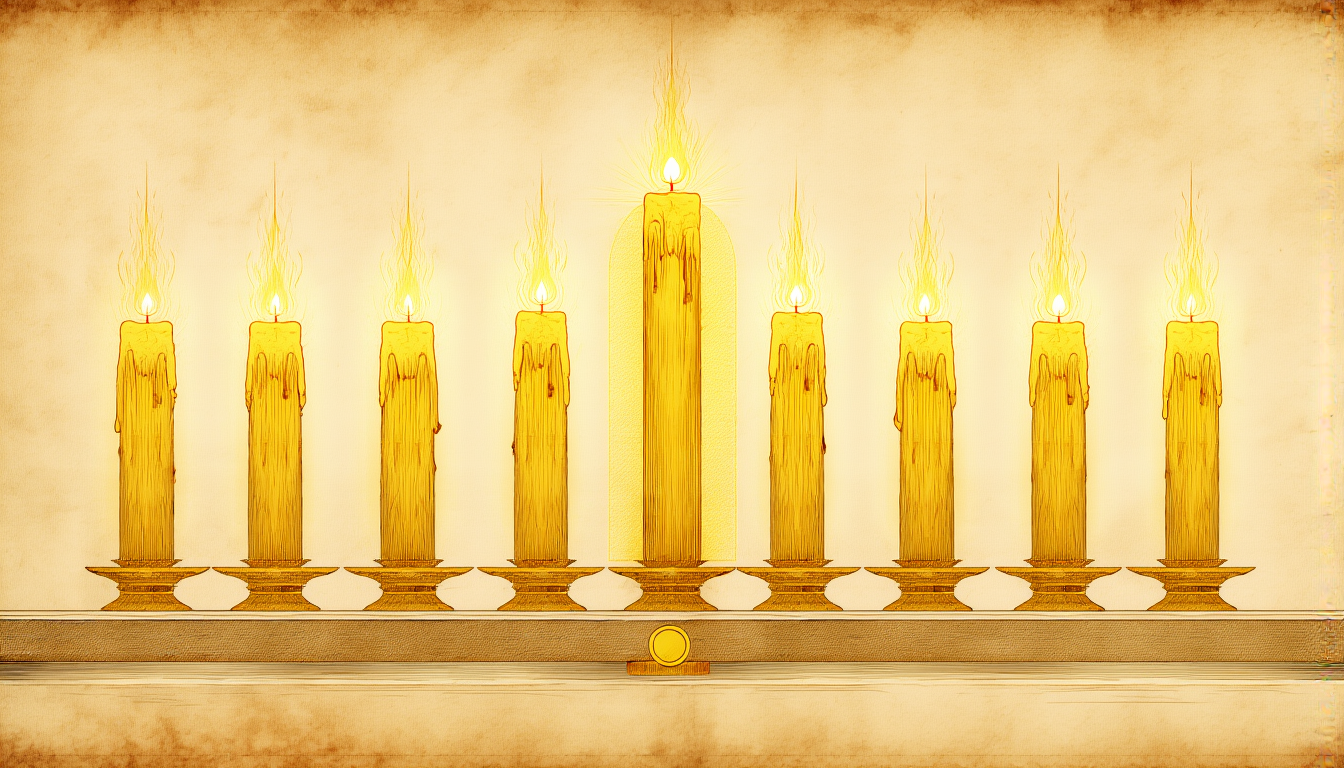
The record in the Gospel of John is specific, and the statements are in the text. The bread of life. The light of the world. The door. The good shepherd. The resurrection and the life. The true vine. And the branch that abides not — "For without me ye can do nothing." These are not scattered metaphors. They form a set, and they come from a tradition the scholars can trace.
The background is documented: the prophet's voice in Isaiah 40 through 55, where the speaker of God says "I am he" — rendered in the Greek as ego eimi, the same first person the name speaks. And in the trial scene the set does something: "Now when Jesus said unto them, I am he, they went backward, and fell to the ground." The officers fall when the name is spoken. They do not fall for an argument. They fall for the sound.
"Before Abraham was, I am."John 8:58 · King James — the verb, standing aloneWorking Hypothesis
Now the reading. If the name is a verb, then each statement in the set is not a claim about a person's biography. It is a description of what the name does when it operates. The bread of life is what the name does for the hungry. The light of the world is what it does for the dark. The good shepherd is what it does for the lost. Read the set that way, and none of the statements need to be true or false. They are instructions.
One per day. Read each statement as an instruction, not a claim: "Be the light of the world" is an instruction. "Be the good shepherd" is an instruction. For each one, ask a single question: what does this name me to do? And apply the check the teaching gives: if the statement says anything other than balance, that is a break in the code.
The verse, word by word, the way it came through last night.

Last night the decode came through word by word, as a line-by-line substitution of the KJV text. It is a teaching framework, not a scholarly translation — but it is consistent, it is complete, and it does what the move in module 04 says it will do. Here is the table, verbatim from the channeling:
| The literal reading | The decoded reading |
|---|---|
| "I am" | God is |
| "the way" | the path |
| "the truth" | the purity |
| "the life" | the purpose |
| "no man" | all |
| "cometh" | enter |
| "unto the Father" | to my Father |
| "but by me" | except if in me |
The rendered verse
God is the Path, the Reality, and the Breath of Life. No one can complete the journey of arrival to the Father, were it not for waking up to, and walking inside of, God.
The parable rendering
No one can complete the journey to the Homeland of the Father, were it not for waking up to, and walking inside of, the Way, the Truth, and the Life.
"The door had a list. The frequency has a condition, and the condition is waking up, and walking inside."The channeling · 2026-10-17
Notice what the table does to the argument. There is no list. There is no gate. The condition is not permission — it is orientation: waking up, and walking inside. The sentence was never a door. It was an invitation into a current, and the noun reading turned the current into a checkpoint.
This week, take any statement that has been used as a door — against you, or against someone else. Decode it the way the table does: the literal noun, then the verb underneath. Write the balance sentence in your own words. Read it out loud. Ask: is it balanced? If the information you are feeling fights the words, it is not yours yet.
John 14, verses 4 to 12, as one continuous thought.

The channeling read the passage not as a list of promises but as one thought moving in five moves. Here is the spine, with the record beside each move.
- The Trap of the Physical. Thomas, in the record: "Lord, we know not whither thou goest: and how can we know the way?" The senses are the trap. You cannot see the current, so you cannot walk in it — until you stop needing to see it first.
- The Great Paradigm Shift. "I am the way." The way is not a road that leads somewhere. The way is the walking itself, in the name. The shift is from a destination to a state.
- The Dissolution of Separation. Philip: "Shew us the Father, and it sufficeth us." The answer in the record: "he that hath seen me hath seen the Father" — and "the Father is in me, and I in the Father." Not two places containing each other. An immersion model: completely immersed, and the immersion is the unity.
- The Transmission of Universal Power. The record: "greater works than these shall he do." The reason the channeling gives: the physical form is dissolving back into the boundless source of the Father. The ego was the container, and the container is being removed.
- The Blueprint. He is a prototype, not an exclusive gatekeeper. He emptied his ego so completely that God could act through him, and he says so explicitly: anyone who wakes up to the same "God is" reality inherits the same creative power. The gatekeeper reading is the noun reading.
"He is a prototype. The gatekeeper reading is the noun reading."The channeling · 2026-10-17 — on the Parable of the Awakening Current
One line from the same night, on why the argument matters: "to put the works of God into a truth or a lie seems to be out of integrity of the intention of God." The challenger asked for truth or lie. The passage, read as the current, is neither. It is an invitation with a condition, and the condition is orientation.
Pick one of the five moves and sit with it for ten minutes. Make sure the information you are feeling is not what you are thinking. If the sentence fights in your chest, it is not yours yet. If it settles, write it down. That is the code.
You do not believe it. You walk in it.
The teaching ends where every argument fails, which is in the body. The method has four steps, and each one is a check on the one before it.
- Decode. Take one statement and decode it as an instruction, the way the table in module 06 does. The literal noun, then the verb underneath.
- Write the balance sentence. Write the decoded reading in your own words. Your words. The teaching's words are the map; your sentence is the territory.
- Test it in the body. Read it out loud. Make sure the information you are feeling is not what you are thinking. If it fights in your chest, it is not yours yet.
- Live it for a day. At the end of the day, sit down and ask two questions: where did I walk in it, and where did I fall back to the door? The pattern you find is your code.
And the two failure modes, named so you can catch them. Testing in the head — thinking about the sentence instead of feeling it. And the feeling of production — feeling like you are producing the sentence, and thinking you are. The teaching's answer, using its own image: the withering branch that knows it is withering has already turned toward the vine — and that turning is the connection.
"The feeling of production is not proof of connection."The channeling · 2026-10-17
So go in. The name is still a verb, and it is still yours to speak.

The whole dossier in one breath. The name is a verb — "he causes to be" — spoken at a burning bush. The noun was imported, by a translation into a language that had a word for Being. The seven sayings are what the name does, not who a man is. The decode is the instruction, word by word. The current is the immersion, and the method is the walk. And the argument — liar or credible — was an argument about a door that was never in the grammar.
Presence has no sides. And the frequency is still sounding, in the now, the only tense the verb has. The date you are standing on is a photograph of the room where it is sounding. You can stand in the photograph. You cannot live in it.
Thank you, and I love you.
What is documented, what is taught, and where the lines were drawn.
Three lanes, used throughout. Documented Record a claim with a source you can check. Working Hypothesis a teaching framework, offered as a framework. The filter at the top of the page shows you either lane on its own.
The name, the verb, and the translation. The reading of the exchange in Exodus 3, the wordplay between the burning bush (seneh) and the mountain (Sinai), and the causative sense of YHWH come from the SBL's Introduction to the Hebrew Bible, chapter on Exodus. The Septuagint rendering of the name as eimi ho on, and the blunt note that Hebrew had no concept of Being in the Greek philosophical sense, are documented in the same text. The background of the "I am he" statements in the Gospel of John in the prophet's voice of Isaiah 40–55 is the documented analysis of Jozef Kruger, "Old Testament Contexts for the I AM Statements in John's Gospel" (Crosswalk, 2026-09-28), which also covers the trial scene in which the officers fall to the ground.
The teaching. The shift (the I released from the ego), the seven sayings read as what the name does, the word-by-word decode of John 14:6, the Parable of the Awakening Current, and the immersion method are the channeling of 2026-10-17, delivered by Sean as a teaching framework. One contemporary echo, documented for the record: James F. Twyman's The Moses Code (2008), whose publisher describes it as the most powerful manifestation tool in the history of the world — a claim, not a proof. The challenge this dossier answers was put out by a pastor's reel, and a church response titled "New Truth or Recycled Deception?" (United Conservative Church) engaged it; its text was not retrievable, and it is cited here by title only.
Doctrine used verbatim · the channeling, 2026-10-17
"The I is always released from the ego. When it is not, it is not of God."
"God is presence, and presence absorbs the concepts of space and time."
"God is the Path, the Reality, and the Breath of Life. No one can complete the journey of arrival to the Father, were it not for waking up to, and walking inside of, God."
"He is a prototype. The gatekeeper reading is the noun reading."
"to put the works of God into a truth or a lie seems to be out of integrity of the intention of God."